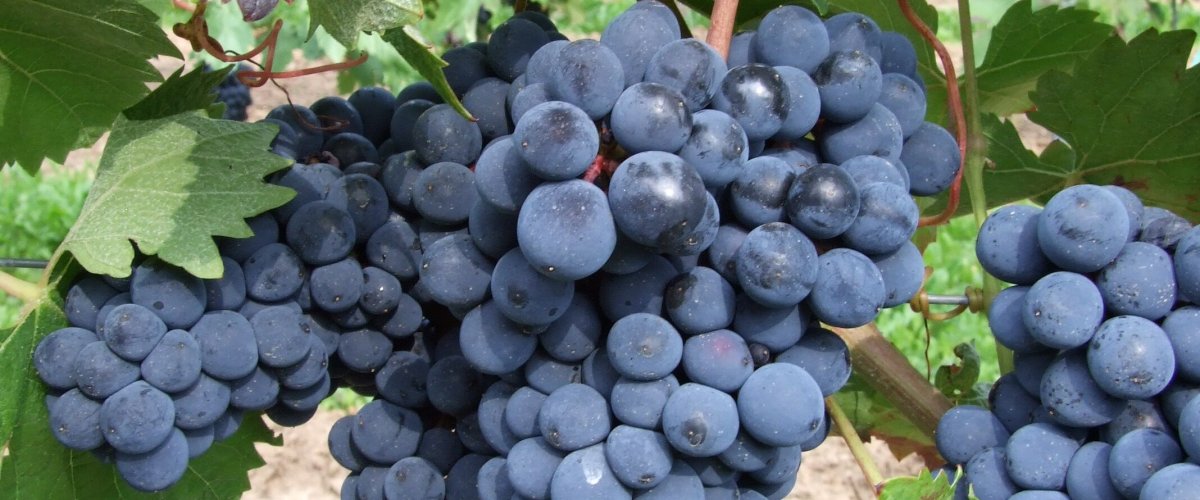
Dunkelfelder: The UK's Most Underrated Red Grape
Grown at just 13 UK vineyards, Dunkelfelder is one of England's best-kept secrets — a deeply coloured, red-fleshed German crossing that punches well above its weight in our cool climate. Already ranking in the top ten on Google for its own name with virtually no competition, this guide covers everything growers, buyers, and visitors need to know about Dunkelfelder in the UK.
What is Dunkelfelder?
Dunkelfelder is a red-fleshed (teinturier) grape variety originally bred in Germany. Unlike most red grapes, where only the skins carry pigment, Dunkelfelder has deeply coloured flesh as well — meaning even a small addition to a blend can dramatically intensify colour and structure. The name itself translates roughly from German as "dark field," a fitting descriptor for one of the most intensely pigmented grapes in cultivation.
In the UK, Dunkelfelder occupies a quiet but important niche. It is grown at 13 vineyards spread across six regions, used both as a blending grape to give backbone to English reds and, occasionally, as a compelling varietal wine in its own right. Its ability to ripen fully in England's cooler, shorter seasons — while retaining vibrant acidity — makes it a pragmatic and increasingly respected choice among English winemakers.
Origins and genetics
Dunkelfelder was bred by Gustav Adolf Fröhlich, working at the Geilweilerhof viticultural institute in Germany's Rhineland-Palatinate region. DNA analysis confirmed its parentage as a crossing of Madeleine Angevine and Teinturier du Cher — the latter being itself a teinturier variety, which is where Dunkelfelder inherits its distinctive red-fleshed character. In technical literature, the variety is occasionally referenced by its breeding code Fröhlich V 4-4 (sometimes written Froelich V 4-4).
In Germany, Dunkelfelder is grown primarily in Baden, Pfalz, and Rheinhessen — the country's warmer, red-wine-friendly regions. Its purpose there has always been functional rather than prestigious: adding deep colour and structural tannin to blends of lighter German reds such as Spätburgunder (Pinot Noir) and Portugieser. Single-varietal Dunkelfelder wines exist but remain unusual even in Germany, where the grape has never achieved the mainstream recognition of Dornfelder, despite sharing a similar blending role.
The grape arrived in England as part of the broader wave of German red crossings introduced from the late 1980s onwards, alongside Dornfelder, Regent, and Rondo. English growers exploring the possibilities of still red wine production were drawn to its reliable ripening and exceptional colour, qualities that remain its chief appeal in the UK today.
Growing Dunkelfelder in the UK
Dunkelfelder is classified as a relatively early ripener, which is one of its most important practical advantages for English viticulture. In a climate where red grapes routinely struggle to achieve phenolic maturity before autumn weather closes in, a variety that reaches harvest readiness in late September to mid-October represents a meaningful reduction in risk compared to later-ripening varieties.
Being a pure Vitis vinifera crossing, Dunkelfelder does not carry the built-in disease resistance of hybrid varieties like Regent or Rondo. Growers should expect standard vinifera susceptibility to downy mildew, powdery mildew, and botrytis, and plan canopy management and spray programmes accordingly. One documented vulnerability worth noting is susceptibility to late spring frosts — a significant consideration for exposed UK sites, particularly in the Midlands and the North.
Where site selection is concerned, the variety performs best on south or south-west facing slopes with free-draining soils — chalk, greensand, and light loams suit it well. Heavy, moisture-retentive clay soils that delay ripening are best avoided. The majority of UK Dunkelfelder plantings are concentrated in the South East (4 vineyards) and East Anglia (4 vineyards), regions that offer the warmest, most reliably sunny growing conditions in England.
A key viticultural advantage in the UK context is the teinturier character itself: because both skin and flesh carry intense pigment, winemakers can extract deep colour at relatively modest potential alcohol levels. This means that even in cooler vintages where sugar accumulation is limited, the resulting wine still has the colour intensity that consumers associate with a serious red — a significant practical benefit for English producers.
Flavour profile and wine styles
Dunkelfelder produces wines of dark fruit intensity with good structural backbone. Expect aromas of blackberry, plum, and blackcurrant, with supporting notes of black pepper and a hint of dark chocolate. On the palate, the variety delivers medium to full body, firm acidity, and moderate tannins — a profile that makes it both food-friendly as a varietal and invaluable as a blending component.
English Dunkelfelder tends to express itself differently from its German counterparts. Where Baden blends can produce rich, riper, higher-alcohol wines (often 13.5–14% ABV), the English climate typically yields fresher, lighter expressions — think 11–12.5% ABV, with brighter acidity and crunchy dark fruit rather than the plush ripeness of a warmer climate. In cooler English vintages, the fruit can lean more toward tart blackcurrant and red cherry, sometimes with a subtle leafy note — a characteristic that many English wine drinkers find appealing rather than limiting.
Wine styles produced in the UK
UK winemakers use Dunkelfelder in three main ways. As a blending grape, it contributes colour and mid-palate depth to blends with Pinot Noir, Rondo, Regent, and Dornfelder, lending structure to varieties that can sometimes lack it in English conditions. As a varietal still red, it produces a deeply coloured, medium-bodied wine well suited to early drinking — fruit-forward and unoaked or lightly oaked, aimed at the growing English red wine market. As a rosé, the teinturier flesh gives vivid colour from very short skin contact, producing vividly hued, dry to off-dry wines with bright berry fruit and fresh acidity.
Ageing potential for English Dunkelfelder is modest by design. Most expressions are crafted for drinking within three to five years, prioritising freshness and fruit over longevity. In exceptional warm vintages, structured examples with some oak influence may reward cellaring to eight years, but the variety's strength lies in accessibility rather than ageing.
Food pairing
The combination of dark fruit, firm acidity, and moderate tannins makes Dunkelfelder a natural partner for hearty, savoury food. For a varietal still red, classic British pairings work well: roast lamb with herb crust, beef or venison stew, Cumberland sausage, and cottage pie all complement the wine's structure without overwhelming its fruit. Mature Cheddar, Red Leicester, and Gouda are natural cheese pairings, as are semi-hard farmhouse varieties.
The variety's firm acidity makes it surprisingly good with tomato-based dishes — pizza, pasta ragù, and puttanesca-style sauces — where the wine's fruit echoes the tomato while the acidity cuts through richness. For BBQ occasions, grilled meats and smoky ribs with spiced rubs pair well with the pepper notes in the wine.
For rosé and lighter Dunkelfelder expressions, move toward charcuterie boards, pork pies, pulled pork, and grilled halloumi, or Mediterranean dishes such as grilled vegetables and mezze. The bright acidity handles mild spice well, making it versatile across Middle Eastern and lighter Asian-influenced dishes.
UK producers growing Dunkelfelder
With just 13 UK vineyards cultivating the variety, Dunkelfelder remains one of England's rarest commercial grapes. Production volumes are small, and wines — where they are bottled as a varietal — are often sold primarily through cellar doors or producer mailing lists rather than wide retail distribution.
Bolney Wine Estate in West Sussex is among the best-known English producers to have worked with Dunkelfelder, typically incorporating it into their still red blends alongside other Germanic varieties. The South East accounts for four of the UK's thirteen Dunkelfelder growers, with East Anglia matching that count — reflecting the bias towards England's warmer, drier regions for red grape production.
Explore all 13 UK vineyards growing Dunkelfelder, including which are open to visitors for tastings.
Dunkelfelder vs Dornfelder: what's the difference?
These two German red varieties are frequently confused — understandably, given their similar names, shared origins in the German wine industry, and overlapping roles as blending grapes for colour and structure. But they are distinct varieties with different genetic backgrounds and slightly different expressions.
Dornfelder, bred by August Herold in 1956, has become Germany's second most planted red grape and enjoys far greater commercial recognition. It is lighter in flesh pigmentation than Dunkelfelder (not a teinturier variety), typically produces softer, more approachable wines, and has a well-established retail presence in the UK as an imported German wine.
Dunkelfelder, by contrast, remains rare even in Germany. Its red flesh makes it more intensely coloured, its tannins tend to be firmer, and its flavour profile leans darker and spicier. Where Dornfelder has become a familiar supermarket red, Dunkelfelder remains a specialist ingredient — prized by winemakers precisely because most consumers have never encountered it.
Frequently asked questions
What does Dunkelfelder taste like?
Dunkelfelder typically shows aromas of blackberry, plum, blackcurrant, black pepper, and dark chocolate. On the palate it is medium to full-bodied with firm acidity and moderate tannins. English examples tend to be fresher and lighter than German versions, with brighter fruit and lower alcohol — usually 11–12.5% ABV.
Is Dunkelfelder the same as Dornfelder?
No, they are distinct varieties. Both are German red crossings used for colour and structure in blends, but Dunkelfelder is a teinturier grape (red flesh as well as skin), making it more intensely coloured. Dornfelder is far more widely planted and commercially recognised, while Dunkelfelder remains rare even in Germany.
Where is Dunkelfelder grown in the UK?
Dunkelfelder is grown at 13 UK vineyards across six regions. The South East (4 vineyards) and East Anglia (4 vineyards) account for the majority of plantings, with further examples in the West, Mid and North, Wessex, and the Thames and Chilterns region. Five of the 13 vineyards are open to the public for visits and tastings.
What is a teinturier grape?
A teinturier grape is a red variety where both the skin and the flesh carry colour pigment, unlike most red grapes where only the skins are pigmented. This means teinturier varieties like Dunkelfelder produce exceptionally deep-coloured wines and are often used in blending to boost colour intensity in lighter red wines.
What food pairs well with Dunkelfelder wine?
Dunkelfelder pairs well with hearty, savoury food. Good matches include roast lamb, beef and venison stew, Cumberland sausage, pizza, pasta with tomato-based sauces, and mature hard cheeses such as Cheddar and Gouda. For rosé expressions, try charcuterie, pulled pork, grilled halloumi, and Mediterranean dishes.
What is the alternative name for Dunkelfelder?
Dunkelfelder is sometimes referenced by its breeding code, Fröhlich V 4-4 (also written Froelich V 4-4), after its breeder Gustav Adolf Fröhlich who developed the variety at the Geilweilerhof viticultural institute in Germany.